“In the world of materials handling equipment, efficiency and safety are never optional, they’re non-negotiable.” But here’s the twist: the right forklift jib can make a regular forklift into a powerful lifting machine. Choosing the right forklift attachment can mean the difference between smooth operations and expensive mistakes. A fixed jib that works every time or a telescopic attachment that lets you do more than ever before can make all the difference.
Everyone who works in a warehouse, coordinates logistics, or runs operations in Melbourne knows that forklifts are only as useful as the attachments they carry. Forklift jibs are one of the most useful but often overlooked tools you have for moving materials. They help businesses lift, move, and place heavy loads with accuracy, all while keeping workers safe and workflows running smoothly.
In this article, we’ll look closely at the differences between fixed and telescopic forklift jibs and talk about their pros and cons and the best uses for each. By the end, you’ll have useful information that will help you choose the best forklift attachment for your needs. We’ll also talk about safety issues, load limits, and real-world examples of how to use the product. This will help you make a choice that is not only informed, but also good for your business in Melbourne.
What Is a Forklift Jib?

A forklift jib is an extra piece that lets a forklift lift things that are too heavy for its regular forks to reach. These attachments are very helpful for construction, warehousing, and maintenance jobs where you need to lift and move heavy things into tight or high places.
There are primarily two types of forklift jibs:
- Fixed Forklift Jibs: These have a set length and are great for tasks that need to be done over and over again with the same lifting distance.
- Telescopic (Extendable) Forklift Jibs: These come in different lengths, so you can adjust them to fit different load sizes and reach different heights.
Fixed vs. Telescopic Forklift Jibs: A Comparative Analysis
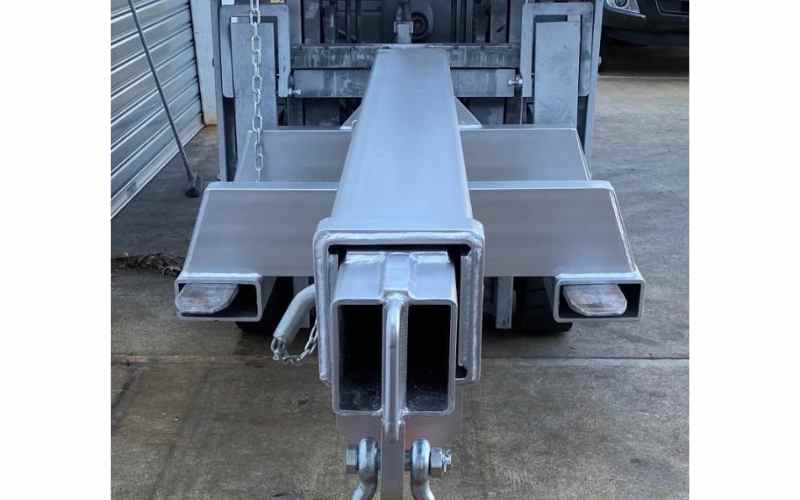
Fixed Forklift Jibs
Advantages:
- Simplicity: Fixed jibs are easy to use and take care of because they don’t have any moving parts.
- Durability: Because they are built to last, they can handle heavy-duty tasks.
- Cost-Effective: Because they are easier to build, fixed jibs are usually less expensive.
Disadvantages:
- Limited Reach: The fixed length makes it hard for the forklift to get to different heights or distances.
- Less Versatility: Not good for jobs that need to change the lifting distance often.
Ideal Applications:
- Transporting materials over short distances.
- Lifting loads to a consistent height.
- Operations where the setup of the equipment stays the same.
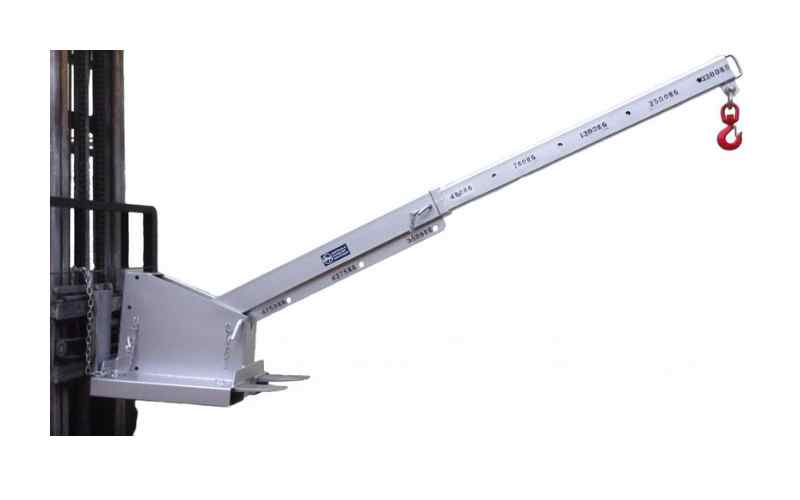
Telescopic or Extentable Forklift Jibs
Advantages:
- Adjustable Reach: You can lift things at different distances with the design that can be changed, which makes it more flexible.
- Increased Versatility: Good for jobs that need to be able to reach and change height in different ways.
- Enhanced Efficiency: Lessens the need to move the forklift, which speeds up the process of moving materials.
Disadvantages:
- Complexity: More moving parts can mean more work to keep things running.
- Higher Cost: Because of the advanced design, they are usually more expensive.
- Operator Training: Needs proper training to be used safely and effectively.
Ideal Applications:
- Raising materials to different levels.
- Getting to places that are hard to reach.
- Dealing with things of all shapes and sizes.
Side-by-Side Comparison
| Feature / Factor | Fixed Forklift Jib | Telescopic (Extendable) Forklift Jib |
|---|---|---|
| Length / Reach | Predetermined, fixed length | Adjustable, extendable to different lengths |
| Versatility | Limited, best for repetitive tasks | High, suitable for varying lifting distances |
| Durability | Very durable, fewer moving parts | Long lasting but more moving parts require maintenance |
| Cost | Generally more affordable | Higher cost due to adjustable design |
| Ease of Use | Simple to operate | Requires training for safe operation |
| Maintenance | Low maintenance | Moderate maintenance needed |
| Ideal Applications | Lifting loads at a consistent height, short-distance tasks | Lifting loads to different heights, tight or variable spaces |
| Operational Environment | Works well in stable, repetitive environments | Best for dynamic, changing workspaces |
| Safety Considerations | Straightforward load handling | Must consider reach extension and load capacity |
| Efficiency | Efficient for predictable tasks | Reduces repositioning, more efficient for variable tasks |
Making the Right Choice for Your Business
When deciding between a fixed and telescopic forklift jib, keep these things in mind:
Task Requirements: Check out how the tasks are. A telescopic jib might be better if you need to lift things to different heights or distances. A fixed jib might be enough for tasks that always require the same amount of lifting.
Budget Constraints: Check your budget. Telescopic jibs are more flexible, but they cost more. Fixed jibs are cheaper, but they might make it harder to change how you work.
Operational Environment: Think about where the forklift will be used. For instance, if you need to work in small spaces or places where you can’t move around much, a fixed jib might be better.
Safety Considerations: Make sure that the jib you choose meets safety standards and that the people who will be using it are well-trained.
Safety and Compliance
Using forklift jibs is always risky. To lessen these:
- Regular Inspections: Before each shift, check both the forklift and the jib attachment to make sure they are in good working order.
- Operator Training: Make sure that forklift operators know how to use jibs safely, including how to attach them correctly and how much weight they can hold.
- Manufacturer Guidelines: Always do what the manufacturer says to do with the forklift and the jib attachment.
- Load Limits: Know how much weight the forklift and the jib attachment can handle. Putting too much weight on something can cause accidents and damage to equipment.
Tips for Maximising the Efficiency of Forklift Jibs
Melbourne businesses should follow a few best practices to get the most out of their forklift jib, whether it is fixed or telescopic. You need to get the right training first. Operators need to know how much weight a forklift can safely lift, how to attach things safely, and how jib extensions change the stability of a forklift.
Next, taking care of the forklift and jib attachment will make them last longer and cut down on the time they are out of service. Check the welds, pins, and hydraulic parts often, especially on telescopic jibs, which have more moving parts.
Also, think carefully about how you plan your lifts. Put the forklift in a place where it won’t have to move around too much and won’t have to extend the jib too far. Using the right jib for the job, one that fits the reach, load, and environment, makes things safer and more efficient.
Finally, use the latest technologies like materials handling equipment in Geelong or other suburb in Melbourne. Some forklifts have safety sensors and digital load monitoring systems that can help things go more smoothly and lower the chance of making a mistake. If you follow these steps, your forklift attachments will work as hard as they can and keep the operators safe.
Where to Source Forklift Jibs in Melbourne
If you run a business in Melbourne and need reliable forklift jibs, look for well-known suppliers that offer a wide range of options to meet your needs. Make sure the supplier gives you:
- Quality Assurance: Items that meet the standards and rules of the business.
- After-Sales Support: Some of the services offered are installation, maintenance, and training.
Final Thoughts
When choosing between a fixed or telescoping forklift jib, consider your daily tasks, your budget, and most importantly, safety. Taking the time to think about these things and talk to a trusted supplier can really help your materials move more smoothly and safely.
Keep in mind that a forklift attachment is more than just an extra, it’s an important part of how you work. Choose the right one, and not only will you make things run more smoothly, but your team will also feel more confident about handling any load.