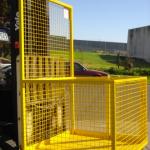
A worker steps into an order-picking cage forty times a day, trusting a weld he’s never inspected and a latch he’s never tested. Order-picking cages lift people, not just pallets, which means a missed crack or a worn anchor point isn’t a minor maintenance gap. It’s a fall risk. Most facilities treat inspection as a single daily tick-box exercise, but a properly maintained order picking cage actually needs three distinct layers of checking. A pre-use inspection before every shift, a periodic maintenance check on a set schedule, and a major periodic inspection at least once a year. This guide breaks down what each layer involves, what Australian standards require, and what to do the moment something fails a check.
Key Takeaways
- An order picking cage requires three separate inspection layers: daily pre-use, periodic maintenance, and major periodic (annual) inspection.
- Daily pre-use checks should cover structural integrity, guard rails, gate/latch function, harness anchor points, load rating plate legibility, and forklift tine engagement.
- Under Australian WorkSafe regulations, lifting equipment used to elevate personnel falls under duty-of-care obligations, and operators typically need an HRW (High Risk Work) licence.
- AS 1418 governs the design and construction standards that order picking cages must meet.
- Any cage that fails inspection must be tagged out and removed from service immediately, not used until repaired and recertified.
What Is an Order Picking Cage and Why Does It Need Regular Inspection?
An order picking cage is a forklift attachment that lifts a worker to shelf height so they can manually select stock from elevated racking. Because it elevates a person rather than a load, it carries a different risk profile to standard forklift cages used for materials handling. A structural failure, a worn latch, or a corroded weld doesn’t just damage stock, it can cause a fall from height. This is why order picking cages, along with other forklift safety cages, require a stricter and more frequent inspection regime than most warehouse equipment.
How Often Should an Order Picking Cage Be Inspected?
An order picking cage needs three separate layers of inspection: daily pre-use checks, periodic maintenance checks, and a major periodic inspection. Each layer catches different types of faults, and skipping any one of them leaves a gap in your safety coverage.
Daily Pre-Use Inspection — What to Check Before Every Shift
Operators should carry out a pre-use inspection before they use the cage on any shift, and they should never skip it, even if the cage worked fine the day before. This check should cover:
- Structural integrity — look for cracks, corrosion, or bent frame members on the cage body
- Guard rails — confirm rails are intact, securely fixed, and at the correct height
- Gate and latch function — test that the gate closes fully and the latch engages without force
- Harness anchor points — check anchor points are free of corrosion and not deformed
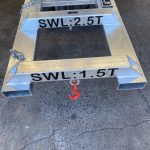
- Load rating plate — confirm the plate is present, legible, and matches the cage’s actual rated capacity
- Forklift tine engagement — verify the cage locks securely onto the forklift tines with the locking pin fully engaged
If operators find any fault here, they must tag out the cage immediately and not use it for ‘just one more shift’.
Periodic Maintenance Inspection — What to Check Monthly or Quarterly
A periodic maintenance inspection goes beyond the visual pre-use check and looks for wear that builds up over time. This includes checking weld integrity more closely, testing the tightness of all bolted connections, and confirming that safety decals and signage remain legible. Most facilities schedule this monthly or quarterly, depending on how heavily staff use the forklift cages.
Major Periodic Inspection — What an Annual or Engineer-Level Check Involves
A major periodic inspection is typically an annual, documented check that a competent person or qualified inspector carries out. It verifies the cage still meets its original design specification under AS 1418, confirms load testing where required, and produces a formal inspection record. This is the layer most facilities underinvest in, yet it’s the one that catches structural fatigue that daily and periodic checks can miss.
What Australian Standards and Regulations Apply to Order Picking Cages?
Order picking cages sit under AS 1418, the Australian Standard covering the design and construction of cranes, hoists, and lifting equipment. Beyond the equipment standard itself, WorkSafe Australia places a duty of care on employers to ensure they inspect, maintain, and safely operate any equipment that elevates a person. In most states, operating a forklift with an order picking cage attachment requires the forklift operator to hold a High Risk Work (HRW) licence, and the task should be covered by a Safe Work Method Statement (SWMS) that documents the inspection steps above.
What Happens If a Fault Is Found During Inspection?
If any check fails, operators must tag out the cage and remove it from service immediately. Staff should physically isolate a tagged-out cage, not just mark it with a sign, so no operator can mistakenly use it. Operators should then report the fault to a supervisor, log it in the facility’s maintenance record, and keep the cage out of service until a qualified person repairs and recertifies it.
Who Is Responsible for Inspecting and Maintaining an Order Picking Cage?
Responsibility is shared across three roles. The operator is responsible for the daily pre-use check before every shift. The site supervisor schedules and tracks periodic maintenance inspections. A qualified inspector or competent person carries out the major periodic inspection and signs off on any repairs. Clear ownership at each level is what keeps forklift cages compliant and safe between formal inspections.
Keeping Your Order Picking Cage Safe and Compliant
A well-maintained order picking cage isn’t optional equipment upkeep, it’s the difference between a safe shift and a fall-from-height incident. This three-tiered strategy of daily pre-use checks, periodic maintenance and major annual inspection gives your team a repeatable system that will meet WorkSafe duty-of-care duties and keep your cage compliant with AS 1418.
Talk to DHEMHE About Your Order Picking Cage Fleet
At DHEMHE, we build every order picking cage we supply to meet AS 1418 requirements from the ground up. Designing load rating plates, guard rails, and harness anchor points for long-term inspection reliability, not just initial compliance. If your current forklift cages are ageing, showing wear, or you’re setting up an inspection program from scratch, our team can help you assess what’s on your floor now and recommend a compliant replacement or maintenance pathway.
Get in touch with DHEMHE today to review your order picking cage fleet, request a compliance-ready inspection checklist template, or discuss a replacement that meets current AS 1418 and WorkSafe standards.